Traditional Slovenian Food – From Grandmother’s Kitchen to the Grill and Peka
Slovenian cuisine is a reflection of landscape, history and tradition — humble yet rich with flavours that reach deep into the country’s roots. From jota and žganci to wild game specialities and slow-cooked peka dishes — every dish tells its own story. In this guide we explore the most important traditional Slovenian foods and explain why the grill and the peka have become symbols of the Slovenian culinary spirit.
What Is Traditional Slovenian Cuisine?

Slovenian cuisine developed at the crossroads of Alpine, Mediterranean and Pannonian culinary traditions — making it truly unique in the European context. Every region has its own specialities: Gorenjska is renowned for wild game and dairy products, the Primorska region for seafood and olive oil, Dolenjska for pumpkin seed oil and cracklings bread. The common thread is the use of local, seasonal ingredients and recipes passed down from generation to generation.
What's on the Menu at Pr'Lovcu
At Gostilna Pr'Lovcu, just minutes from Bled and Pokljuka, we offer a rich selection of traditional Slovenian dishes — from wild game specialities and hearty stews to leskovač grill and peka, prepared from fresh local Gorenjska ingredients.
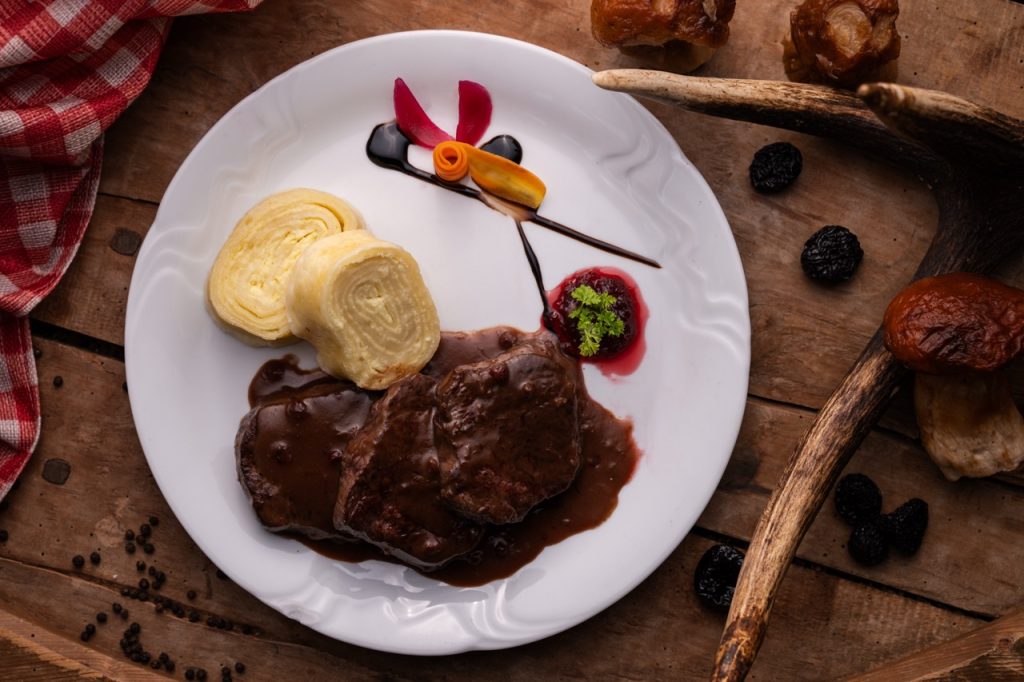
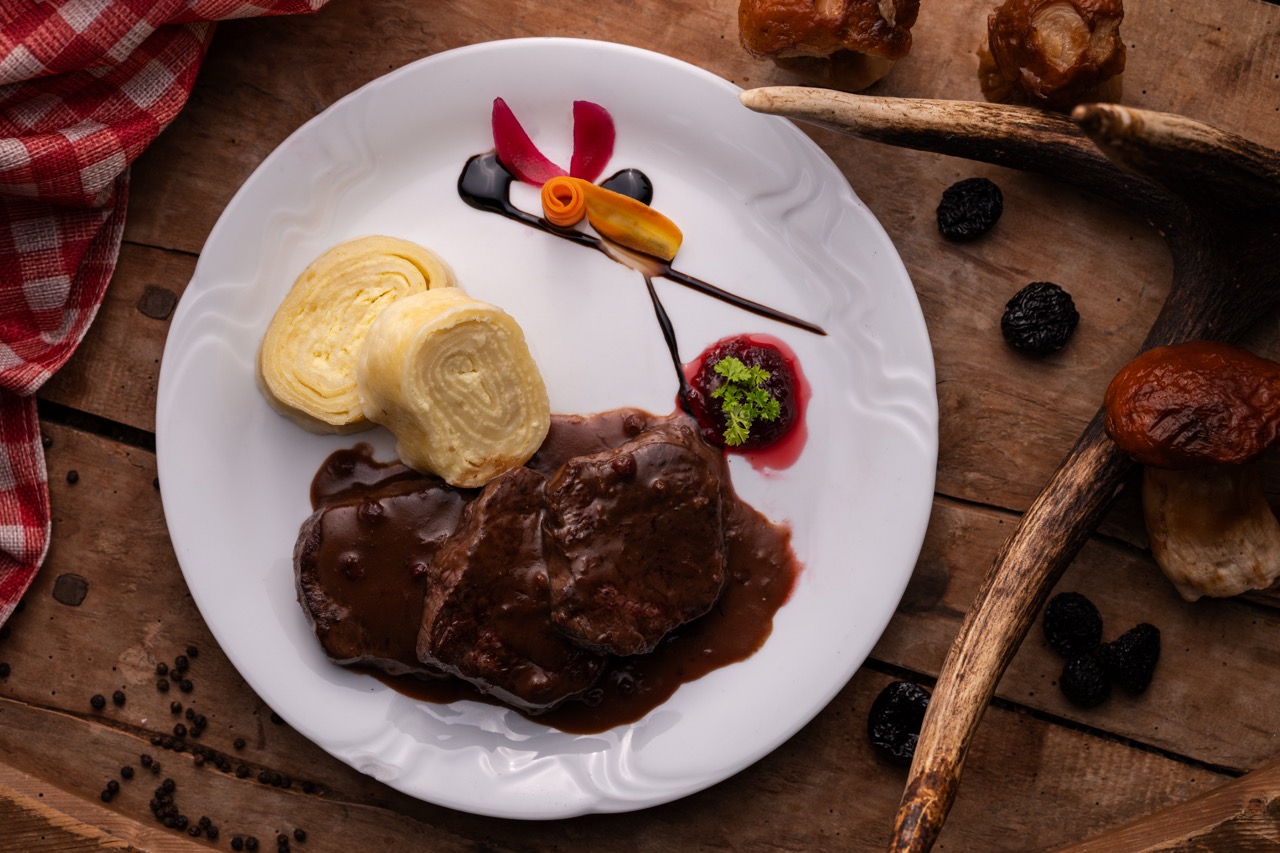
HUNTER'S TROPHY - (venison medallions with lingonberries and štruklji)
27 €
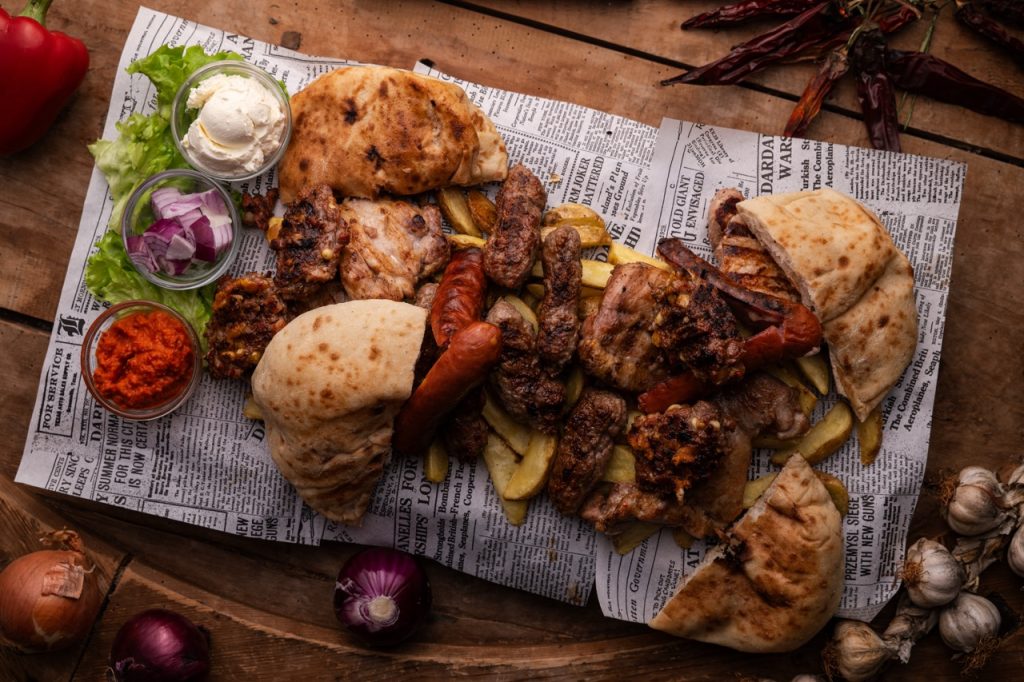
LESKOVAČ ĆEVAPČIĆI
16 €
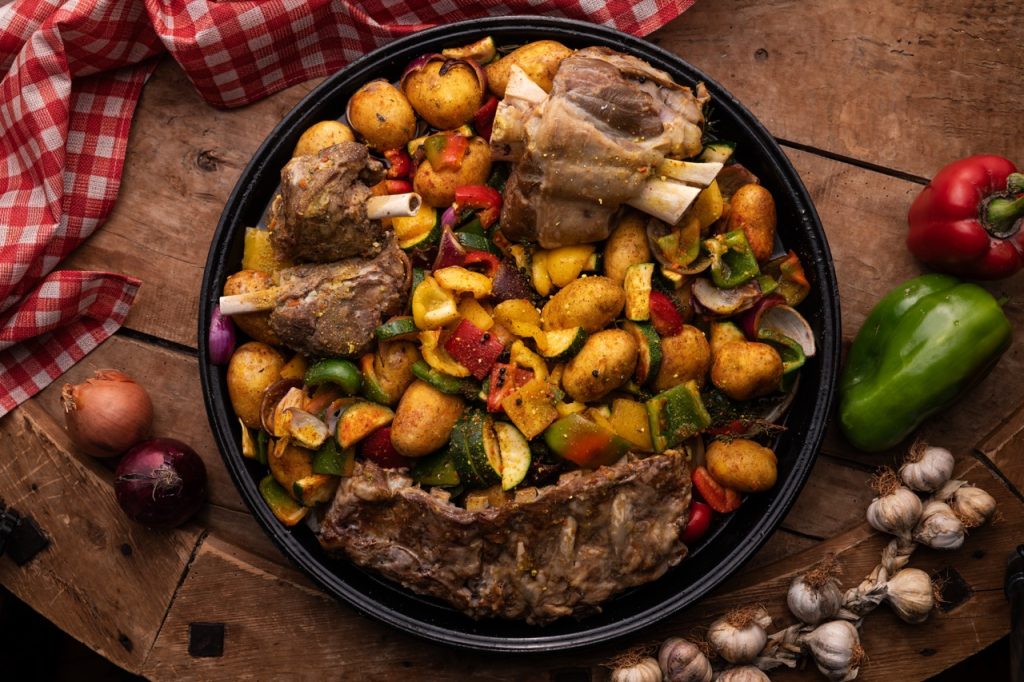
HUNTER'S CHOICE - ( oven-roasted lamb knuckle or ribs)
26 €
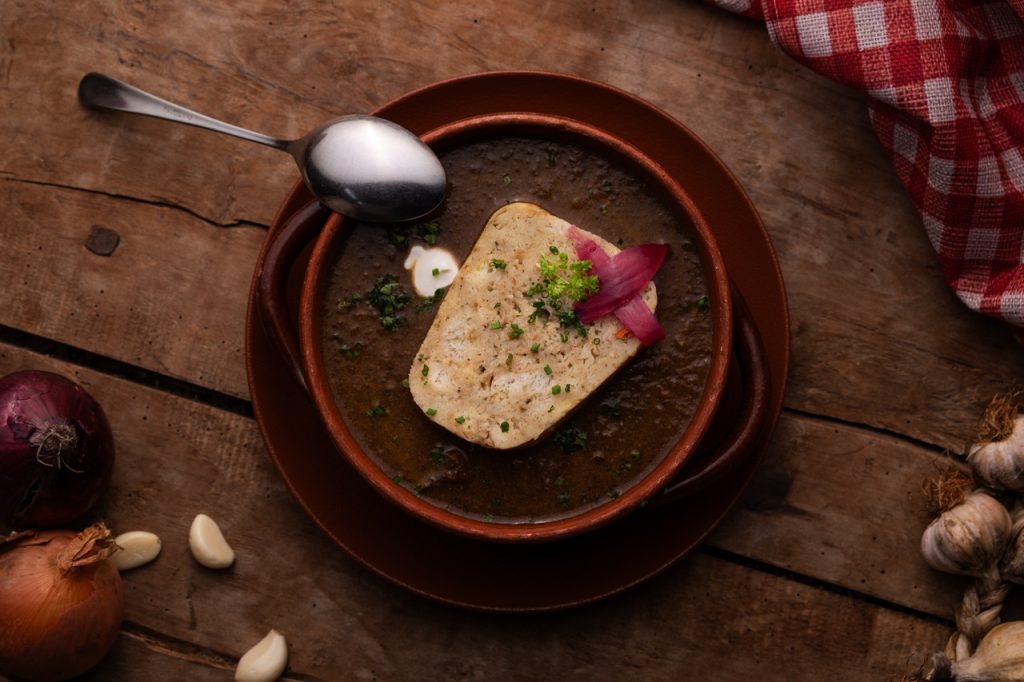
WILD FIRE - (wild game goulash with bread dumpling)
17 €
6 Dishes That Have Become Part of Slovenian National Identity
1. Potica – The Queen of the Slovenian Table
Potica is without doubt the most iconic Slovenian dish. This rolled pastry filled with walnut, poppy seed or tarragon filling is present on every Slovenian festive table — from Christmas to weddings. In 2021 UNESCO inscribed Slovenian potica on its list of intangible cultural heritage, confirming its status as a national symbol.
2. Jota – Gorenjska and Karst Winter Soup
Jota is a thick winter soup made from sauerkraut or turnip, beans, potatoes and bacon. In Gorenjska it is prepared slightly differently than in the Karst region, but the common denominator is always the same — a deep, rich flavour that warms you to the bone. For centuries jota was the food of farmers and labourers; today it appears on the menus of the finest Slovenian restaurants as a symbol of authentic home cooking.
3. Žganci – A Simple Dish with Deep Roots
Buckwheat or maize žganci were the staple food of Gorenjska farmers. Prepared from buckwheat flour with cracklings or milk, they were on the table every day — for breakfast, lunch or dinner. Today they are experiencing a renaissance as a symbol of Gorenjska culinary tradition and increasingly appear as a side dish with wild game or lamb.
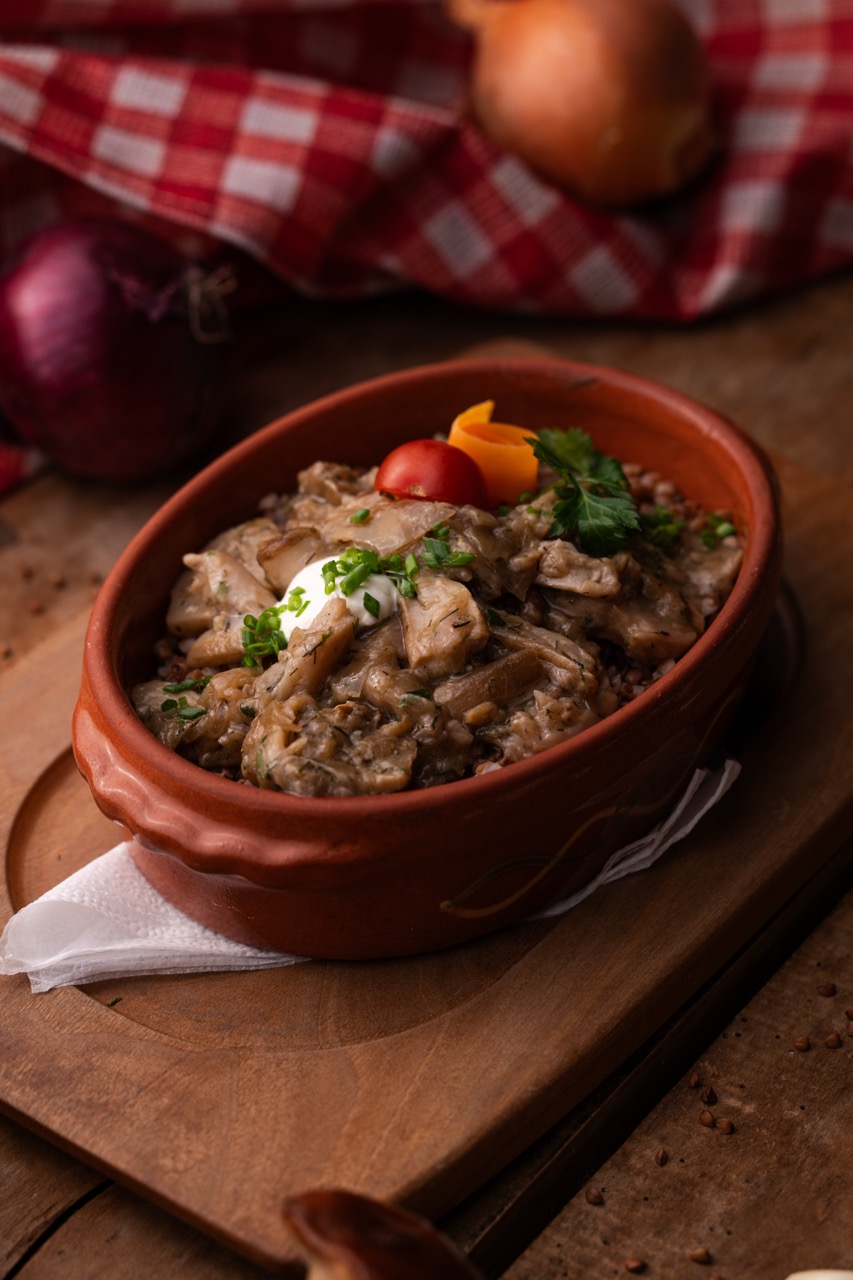
At Gostilna Pr’Lovcu we preserve the tradition of Gorenjska cuisine with wild game specialities, leskovač grill and peka dishes prepared from fresh local ingredients. Every dish on our menu is made with a love of tradition and deep respect for local producers.
4. Kranjska Klobasa – A Protected Slovenian Speciality
Kranjska klobasa is one of the few Slovenian food products with a protected geographical indication. Made from pork with spices and traditionally smoked, it is a staple of Gorenjska fairs, farmhouse suppers and Sunday lunches. Its hallmark is a precisely defined composition and preparation method that sets it apart from all imitations.
5. Wild Game – Gorenjska's Culinary Pride
Gorenjska is a land of forests and alpine meadows, so it comes as no surprise that wild game occupies a special place in its cuisine. Wild game goulash with bread dumpling, roasted venison with lingonberries or fried pheasant are dishes that Gorenjska restaurants have been preparing using generations-old recipes. Wild game is seasonal, local and free-range — everything that modern cuisine values.
6. Peka – Slovenia's Oldest Method of Cooking
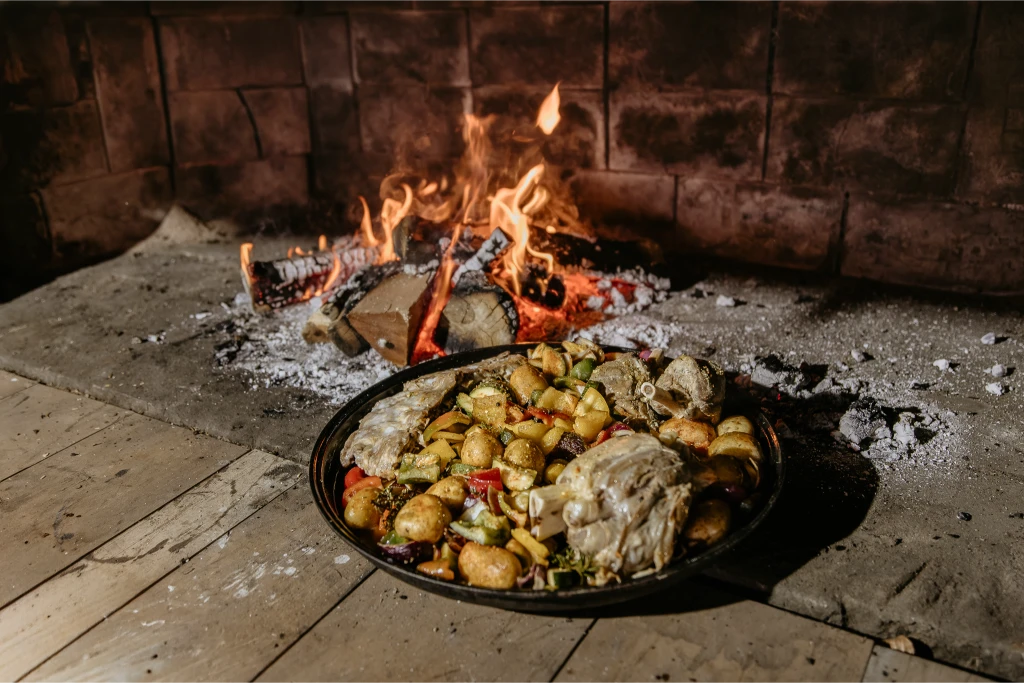
The peka is arguably the oldest method of food preparation on Slovenian soil. Meat, bread or vegetables are placed under a heavy cast-iron lid covered with embers and slow-cooked for hours. The result is incomparably juicy meat with a golden crust — something a conventional oven simply cannot replicate. Suckling pig, lamb knuckle or homemade bread from under the peka are dishes that demand patience — but always deliver.
Why Have the Grill and Peka Become Symbols of the Slovenian Culinary Spirit?
The grill and the peka are more than just cooking techniques — they are symbols of community, patience and respect for ingredients. In Slovenia the whole family gathers around the grill; the peka demands hours of waiting and shared anticipation. These are dishes that require time — and that is precisely what makes them special in a world of fast food and instant gratification.
In Gorenjska, the grill and peka are deeply rooted in culinary tradition — from farmhouse celebrations to hunting suppers. Restaurants that keep this tradition alive today with local ingredients and hands-on preparation are a rarity worth discovering.
Why Does Local Food Matter?
Local food is not merely a trend — it is a responsibility towards the environment, the community and flavour itself. When a restaurant buys meat from a local hunter, vegetables from a Gorenjska farmer and dairy products from a nearby alpine pasture, it supports the local economy while guaranteeing a freshness and quality that industrially produced food simply cannot offer. In Gorenjska, local production has a long tradition — and that tradition is the foundation of authentic Gorenjska cuisine.
Practical Tips – What to Look for in a Good Slovenian Restaurant
Seasonal Menu
A good Slovenian restaurant changes its menu with the seasons. Fresh vegetables and fish in summer, wild game and mushrooms in autumn, jota and žganci in winter — seasonal cooking is a sign that the restaurant buys fresh and local.
Local Ingredients
Ask where the meat, vegetables and dairy products come from. Restaurants that proudly name their local suppliers are generally those where the food is best.
Traditional Preparation
A proper wood-fired grill, a cast-iron peka and soups that simmer for hours — these are the signs of a restaurant that values tradition over speed.
Frequently Asked Questions About Traditional Slovenian Food
What is the most famous traditional Slovenian dish?
Potica is without doubt the most iconic Slovenian dish and national symbol, granted UNESCO intangible cultural heritage status in 2021. Among savoury dishes, kranjska klobasa and wild game goulash are the most widely recognised.
What is peka and why is it special?
Peka is a method of slow cooking under a cast-iron lid covered with embers. Meat prepared this way is incomparably juicy with a golden crust — the result of hours of patient cooking that no oven can replicate.
Where in Gorenjska can I try authentic home cooking with grill and peka?
Gostilna Pr’Lovcu in Zatrnik, just 6 km from Pokljuka and 8 km from Bled, specialises in wild game dishes, leskovač grill and peka dishes made from local Gorenjska ingredients.
What is leskovač grill?
Leskovač grill is a culinary tradition from Leskovac in Serbia that has become deeply embedded in Slovenian cuisine as well. It includes ćevapčići, pljeskavica, skewers and grilled meat rolls — prepared over a real wood fire, not a gas hob.
What is the difference between Gorenjska and Slovenian cuisine?
Gorenjska cuisine is a regional strand of Slovenian cuisine with a strong emphasis on wild game, dairy products and alpine ingredients. Žganci, wild game goulash and lamb are Gorenjska specialities, while kranjska klobasa is found throughout Slovenia.
Is Slovenian cuisine suitable for vegetarians?
Traditional Slovenian cuisine is predominantly meat-based, but it does offer excellent vegetarian options — žganci with milk, meatless jota, štruklji and gibanica are outstanding vegetarian dishes with a deep culinary tradition.
Conclusion
Traditional Slovenian food is alive — not only in grandmothers’ recipes, but in restaurants that lovingly preserve old methods and local ingredients. The grill and the peka are more than techniques — they are a culture and a ritual that brings people together around the table. Gorenjska is a region where this tradition lives in full — in its forests, alpine pastures and restaurants that proudly serve flavours you will find nowhere else.
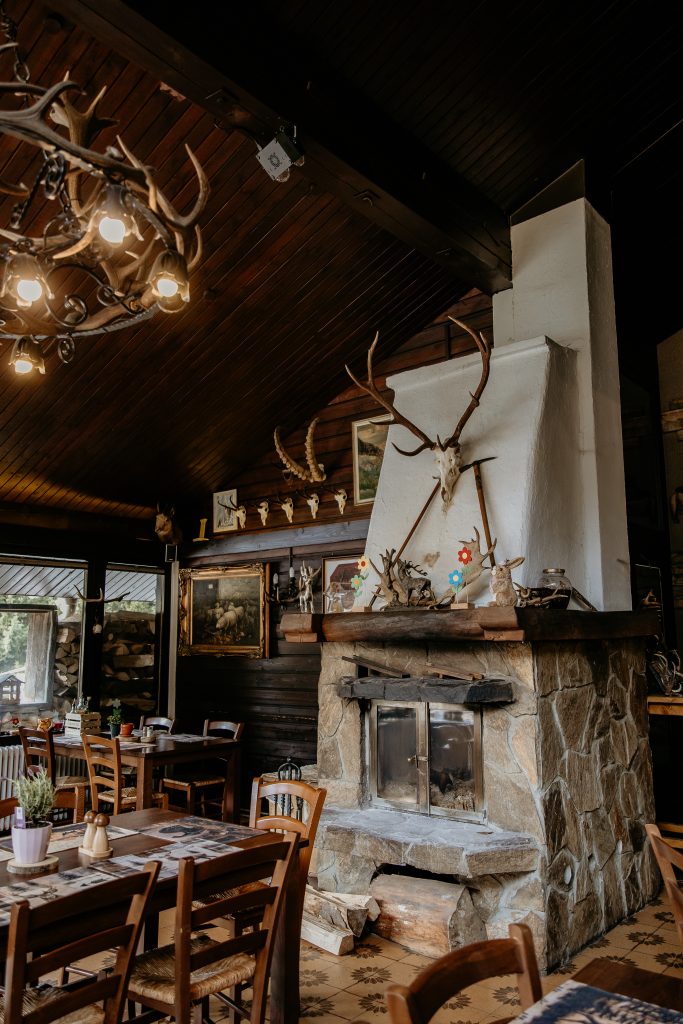
How to Find Us
At Gostilna Pr'Lovcu in Zatrnik we keep the tradition of Gorenjska cuisine alive — just 6 km from Pokljuka and 8 km from Bled. Come and visit us and discover flavours that are part of Slovenia's culinary heritage.
Zatrnik 75,
4247 Zgornje Gorje